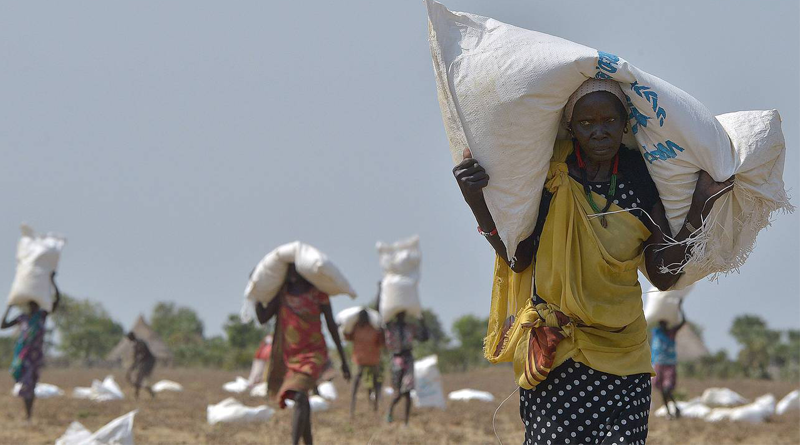
Here are the resolutions for the March 31 General Assembly session. The schools attending are Fort Zumwalt North, DuBray Middle, Fort Zumwalt South, and Fort Zumwalt West.
| Resolution Status | Sponsor | Topic |
| GA-01 | Somalia Fort Zumwalt North | Reducing Famine in Somalia |
| GA-02 | Chile Fort Zumwalt West | Stopping Human Trafficking in India |
| GA-03 | Chad DuBray Middle | Healthcare in Yemen |
| GA-04 | Portugal Fort Zumwalt South | Providing Healthcare in South Sudan |
Resolution GA-01 March 31
Re.: Reducing Famine in Somalia
Submitted to: General Assembly
Submitted by: Somalia
Date: March 31, 2026
Whereas Sustainable Development Goal #2 is Zero Hunger, and
Whereas Sustainable Development Goal #3 is Good Health and Well-Being, and
Whereas Article 25, section 1 of the UNIVERSAL DECLARATION OF HUMAN RIGHTS states, “Everyone has the right to a standard of living adequate for the health and well-being of himself and his family, including food, clothing, housing, and medical care, and necessary social services, and the right to security in the event of unemployment, sickness, disability, widowhood, old age, or other lack of livelihood in circumstances beyond his control.”, and
Saddened that Somalia is the hungriest country in the world with 4.6 million people in Somalia not having an adequate amount of food, and
Noting that over 60% of Somalia relies on agriculture and livestock which have been negatively affected by the drought causing many to go hungry, and
Concerned that 53.2% of the population of Somalia is undernourished and without assistance this number could increase, and
Keeping in mind that about 1.5 million children in Somalia are expected to suffer from severe malnutrition leading to health problems including weakened immune systems and stunted growth,
Be It Hereby Resolved That The General Assembly:
- The United Nations will begin a program named SHEAR (Somalia Hunger Elimination and Agricultural Restoration). This will diminish hunger in Somalia through providing irrigation systems, job opportunities, and food to the people of Somalia.
- SHEAR will begin by installing drip irrigation systems and cultivating grains, rice, and bean farms centralized in the Bay region of Southern Somalia for its fertile soil. This is also the area of Somalia that suffers the most from famine. SHEAR will begin by planting 1,000 acres of grains, rice, and beans.
- We will hire Somalians from nearby cities to tend to the crops and provide free meals for them and their immediate family. This will help support Somali families suffering from poverty.
- SHEAR will need a total of $4 million to plant the fields.
$3,000,000 for drip irrigation
$500,000 for sowing and planting the fields
$300,000 for staffing
$200,000 for transportation and anything else needed
- The $4 million will come from the 25 most wealthy nations. We will ask each nation to donate $160,000. If a nation should decline to donate, then we will ask the Somalian government to create a miniscule tax on livestock exports to help fund SHEAR.
- After 5 years, if the percentage of people undernourished in Somalia decreases from about 53.2% to 45%, then the program will be considered successful and will be spread to different regions of Somalia. Once considered successful, SHEAR will expand to the top 5 other hungriest countries in the world.
Resolution GA-02 March 31
Re.: Stopping Human Trafficking in India
Submitted to: General Assembly
Submitted by: Chile
Date: March 31, 2026
Whereas Sustainable Development Goal #10 is Reduced Inequalities, and
Whereas Sustainable Development Goal #16 is Peace, Justice, and Strong Institutions, and
Whereas Article 4 of the UNIVERSAL DECLARATION OF HUMAN RIGHTS states, “No one shall be held in slavery or servitude; slavery and the slave trade shall be prohibited in all their forms.”, and
Aware that Asia has 62% of victims of human trafficking and India is a major destination, and
Keeping in mind the main reason for human trafficking in India is poverty, lack of education, and exploitation of migration, and
Saddened that human trafficking in young girls under 18 is increasing with 135,000 girls being trafficked annually, and
Alarmed that there were 2,227 cases in 2025, and
Deeply concerned that there was a 27.7% increase in cases for women and children in 2022,
Be It Hereby Resolved That The General Assembly:
- The United Nations will make an organization THAO (Trafficking of Humans Abating Organization) to increase awareness about human trafficking, help find victims of human trafficking, make recovery easy, and train police.
- THAO building will be built in West Bengal to start. We will spend 1 year training AHTU police units to investigate, prevent and reduce human trafficking. We will also build recovery centers with free food for 60 days, free housing, and medical help for victims of human trafficking.
- In total we will spend $5.5 million on the whole organization.
- $1,500,000 will be for recovery centers.
- $1,000,000 will be for training AHTU units.
- $2,000,000 will be for equipment and anything else.
- Chile will give $1,000,000 into the total. The 10 richest nations will each contribute $450,000 to the total cost.
- After 7 years if the percentage of human trafficking in West Bengal goes down 20% we will deem this project successful, and expand to other parts of India and Asia as in Nepal and Bangladesh.
Resolution GA-03 March 31
Re.: Healthcare in Yemen
Submitted to: General Assembly
Submitted by: Chad
Date: March 31, 2026
Whereas Sustainable Development Goal #3 is Good Health and Well-Being, and
Whereas Article 3 of the UNIVERSAL DECLARATION OF HUMAN RIGHTS states, “Everyone has the right to life, liberty, and security of person.”, and
Whereas Article 25, section 1 of the UNIVERSAL DECLARATION OF HUMAN RIGHTS states, “Everyone has the right to a standard of living adequate for the health and well-being of himself and his family, including food, clothing, housing, and medical care, and necessary social services, and the right to security in the event of unemployment, sickness, disability, widowhood, old age, or other lack of livelihood in circumstances beyond his control.”, and
Noting that Yemen is the poorest country with only 200$ per capita, and
Saddened that the poverty rate in Yemen is 82.7%, and
Shocked that the percentage of health access in Yemen is 23.8, and
Be It Hereby Resolved That The General Assembly:
- The United Nations will partner with WHO (World Health Organization) to create another program called YOUTH (Yemen Outreach Union Traveling Healthcare). YOUTH will increase people’s access to healthcare by traveling around and treating people who need it in Yemen.
- YOUTH will start by traveling around in vans and using tents with doctors they hire and settling in a new place every month to treat those in need of healthcare. If there are not enough doctors, then YOUTH will try to find trained doctors along the way.
- The tents that YOUTH will operate out of will provide free healthcare to anyone in life-threatening condition and will have people pay a low cost if their lives are not in danger. Four days a week, YOUTH will be operating. If there are not enough doctors, the UN will train and provide more.
- The total amount for one year of operation is about $700 thousand dollars.
- $400,000 for doctors
- $300,000 for medical supplies, transportation, tents, and anything else.
- This $700 thousand will come from the 10 wealthiest nations. We are requesting to raise the dues per capita by 1%, which would be more than enough. If a country declines the raise, we will ask the next wealthiest if there are more funds needed for YOUTH.
- After 1 year, YOUTH will be evaluated by the UN General Assembly. If the healthcare rate in Yemen increases by 2%, this program will be deemed successful. If successful, YOUTH will continue to run until the 10 year mark from the original start. If it continues to remain successful after 10 years, YOUTH will expand to 3 other nations in need of healthcare. We recommend Guinea, Burkina Faso, and Cameroon because they all have under 5% of access to healthcare.
Resolution GA-04 March 31
Re.: Providing Healthcare in South Sudan
Submitted to: General Assembly
Submitted by: Portugal
Date: March 31, 2026
Whereas Sustainable Development Goal #3 is Good Health and Well-Being, and
Whereas Article 3 of the UNIVERSAL DECLARATION OF HUMAN RIGHTS states, “Everyone has the right to life, liberty, and security of person.”, and
Whereas Sustainable Development Goal #11 is, and Sustainable Cities and Communities, and
Whereas Article 25, section 1 of the UNIVERSAL DECLARATION OF HUMAN RIGHTS states, “Everyone has the right to a standard of living adequate for the health and well-being of himself and his family, including food, clothing, housing, and medical care, and necessary social services, and the right to security in the event of unemployment, sickness, disability, widowhood, old age, or other lack of livelihood in circumstances beyond his control.”, and
Amazed that approximately 6.3 million people are in need of health assistance right now out of approximately 12.3 million people, and
Noting that there is only one doctor for every 65,000 people, and
Saddened that only 26% of children in South Sudan get vaccinated, so approximately 3/4 of kids are not vaccinated, and
Alarmed that 66% of healthcare facilities are nonfunctional because of floods and targeted attacks, and
Concerned that less than 50% of the South Sudan population live within 5 kilometers of a functional health facility,
Be It Hereby Resolved That The General Assembly:
- The United Nationals will start a program called South Sudan Healthcare Outreach (SSHO). This will reinstate healthcare facilities and provide certified medical staff.
- SSHO will initiate their services in the Upper Nile and Jonglei State areas. Which are in serious need of healthcare assistance.
- SSHO will provide sterilization and disinfect tools to ensure cleanliness. It will also provide masks, gloves, vaccines, bandages, syringes, and blood pressure cups, thermometers, and stethoscopes. Doctors will be supplied from the program Doctors Without Borders.
- The total amount of money needed is 215 million
- $200 million dollars for medical supplies
- $5 million dollars for the program Doctors Without Borders
- $5 million dollars for making healthcare facilities functional
- $5 million dollars for extra cost along the way; things like emergencies, urgent repairs,and natural disasters.
- This $215 million dollars will come from the top 50 wealthiest nations. We are asking each nation to donate $4.3 million dollars.
- After 3 years SSHO will be checked up on by the UN. If the amount of people in need of healthcare assistance decreases by 10% then SSHO will be deemed a success. If after the 3 years it is a success the program will be spread to the rest of South Sudan. After this we will expand to Chad and the Central African Republic. These countries are in need of healthcare assistance, and they have very low life expectancies below 58.

