Here are the resolutions for the April 2 General Assembly session. The schools attending are Crestview Middle and the Home School Network. This may not be the final order/draft of resolutions.
| Status: | Sponsored by: | Topic: |
| GA-01 | Germany, Ireland, Panama, Singapore St. Louis Home School Network | RECzech ✔ (Renewable Energy for Czech Republic) |
| GA-02 | Liechtenstein Crestview Middle | Helping Refugees and the Displaced in Gaza |
| GA-03 | Iceland, Nigeria, Japan St. Louis Home School Network | 5by5 Sudan |
| GA-04 | Spain, Malaysia Crestview Middle | Reopening Trade Through the Strait of Hormuz |
| GA-05 | Norway, Austria, Greece St. Louis Home School Network | REFISH (Reducing Extreme Food Insecurity through Sustainable Harvesting) |
| GA-06 | France Crestview Middle | Addressing Political Instability and Human Rights Violations in Myanmar |
Resolution GA-01 April 2
Re.: RECzech ✔ (Renewable Energy for Czech Republic)
Submitted to: General Assembly
Submitted by: Germany, Ireland, Panama, Singapore
Date: April 2, 2026
Whereas Sustainable Development Goal #7 is Affordable and Clean Energy, and
Whereas Sustainable Development Goal #11 is, and Sustainable Cities and Communities, and
Noting that in response to Russia invading Ukraine, The 18th Sanction Package enacted by the EU bans refined oil products derived from Russian crude oil in all member states of the EU. (July 18, 2025), and
Aware that The REPowerEU Regulation phases out pipeline and liquefied natural gas from Russia over the course of the next two years. (January 26, 2026), and
Concerned that Russia has been profiting 10 billion Euros (equivalent to 12 billion US dollars) yearly from the sale of gas and crude oil to the EU, and
Realizing that the EU has already committed $216 billion to aid Ukraine and frozen $210 billion of Russian assets held in EU countries to prevent the use of these funds for the war, and
Alarmed that Czechia experienced a major blackout which affected 6 million consumers and caused Czechia to lose 600 million and one fourth of their entire economy. (July 4, 2025), and
Frightened that the invasion of Ukraine has led to the deaths of 55,000 Ukrainian soldiers and additionally more than 70,000 people, both soldiers and civilians, as officially missing as of 2022 when the invasion began,
Be It Hereby Resolved That The General Assembly:
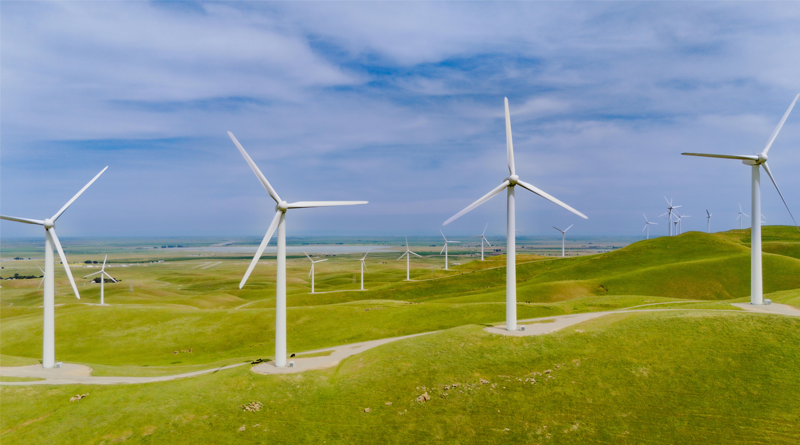
- Our program, called RECzech, will build and install 20 wind turbines near Tisá and Ústí nad Labem, Czech Republic (member state of the EU) at the coordinates of 50.67828179548935, 14.082380103231703 . Wind turbines will be transported by freight train from Cuxhaven Station in Cuxhaven, Germany from the Siemens Gamesa factory to the Ústí nad Labem Hlavní Nádraží train station in Czech Republic which is a distance of 388 miles. We will hire people from the Czech Republic to install and maintain the wind turbines with German engineers training them on building and maintaining wind turbines.
- An average size industrial wind turbine costs $3 million for a total of $60 million for 20 wind turbines. Germany will donate the cost of transportation of the wind turbines on freight trains to the project site. The cost of installing wind turbines, including paying workers, is $550 thousand. The total cost for this project is $60,550,000. For funding we are asking for money from the top 20 richest countries, but given that 14 of these are members of the EU, those countries will provide a larger total portion which will be 85% of the total budget. Each of the 14 EU countries will provide $3,676,250. The other 6 countries will provide $1,513,750 each. In order to honor the donation from each of the countries, we will paint each of their country’s flags on the base of the wind turbines.
- The timeline for RECzech will be two years given that The REPowerEU Regulation will phase out Russian oil within 2 years.
- We will know RECzech is successful if they reach optimum efficiency for their working conditions which is 29.2 minutes of wind turbine production powering one Czech home for a month.
- If RECzech is successful, we will expand to include Hungary and Slovakia in phase 2 because they still rely on Russian oil and gas, as well as Ukraine to help rebuild infrastructure as per the plan in The REPowerEU Regulation. We will also expand to Lithuania, Latvia, and Estonia as they have faced threats from Russia. Phase 3 will involve helping Czechoslovakians to purchase rooftop solar panels for their homes to increase energy sovereignty/independence and decrease impact of blackouts.
Resolution GA-02 April 2
Re.: Helping Refugees and the Displaced in Gaza
Submitted to: General Assembly
Submitted by: Liechtenstein
Date: April 2, 2026
Whereas Article 3 of the UNIVERSAL DECLARATION OF HUMAN RIGHTS states, “Everyone has the right to life, liberty, and security of person.”, and
Whereas Article 14 section 1 of the UNIVERSAL DECLARATION OF HUMAN RIGHTS states, “Everyone has the right to seek and to enjoy in other countries asylum from persecution.”, and
Whereas Sustainable Development Goal #16 is Peace, Justice, and Strong Institutions, and
Recognizing that people get less than the minimum amount of water (3 liters). This is caused by overcrowding and scarcity of clean water, and
Shocked that 80% of displaced people are ill. The unpleasant and overcrowded camps cause many diseases. These diseases range from scabies, diarrhea, and many respiratory diseases, and
Saddened that around 1 million refugees are spread out across 862 refugee camps. With only 0.5 square feet of average space per person, and
Shocking that nearly 1.9 million – around 90% of the population of Gaza – are still displaced,
Be It Hereby Resolved That The General Assembly:
- The United Nations will begin a program called Gaza Refugee Assistance Program (GRAP), designed to help make more refugee camps and fix conditions in those refugee camps. Alongside GRAP will help refugees relocate to different United Nation countries to give people opportunities and make more space in refugee camps.
- GRAP will partner with United Nations Relief and Works Agency (UNRWA), World Food Programme (WFP), and Doctors Without Borders/Medecins Sans Frontieres (MSF), and United Nations High Commissioner for Refugees (UNHCR) to:
- First, GRAP will treat any injured Gazan refugee with the help of MSF. GRAP will have 10 doctors plus 5 paramedics per site to treat deeply cut wounds. These doctors will work in a strong and sturdy tent.
- Also, GRAP will add 76,000 liters more of water per site. The water will refill every 3 months or if the water source has ended at the particular site.
- Alongside, with the help ofWFP, GRAP adds 5 food pantries per camp that can be refilled every 2 months. The food will contain high nutrition like rice and veggies.
- Then, UNRWA will run 20 vans from the borders of Israel to the center, collecting displaced refugees.
- To add on, GRAP will get the help ofUNHCR to provide quality education with 2 covered outdoor schools per refugee camp.
- To fund GRAP the United Nations will raise the dues of the 15 wealthiest countries by $1.5 million per year for 5 years. This will raise a total of $112,500,000. The UNRWA will help the displaced for free. MSF and WFP will provide doctors and food for free. The money will be used towards vans, schools, hospitals, and food pantries.
Budget:
- 76,000 liters* 862 sites= 65,512,000 liters� $195,000 * 5 years= $3,900,000 for Water
- 20 * $41,000 = $830,000 for Vans
- $200 + $800 (medicine and paramedic tools)= $1,000 *862 = $862,000 in Medical Necessities
- $10,000 * 862 = 8,620,000 for Hospital/Tents
- 2,000 * 862 = 1,724,000 for Schools
- 5,000 * 862 = 4,310,000 for Food Pantries
- 20,246,000 * 5 = 101,230,000 (Any extra money will be evenly split into MSF and WFP).
- The program will operate for 5 years, after which the General Assembly will evaluate based on refugee conditions getting better, deaths in Israel going lower, and displaced levels decreased. lf the General Assembly deems that GRAP is successful the program continues but in Lebanon, unless displaced levels have lowered there GRAP won’t go and stop.
Resolution GA-03 April 2
Re.: 5by5 Sudan
Submitted to: General Assembly
Submitted by: Iceland, Japan, Nigeria
Date: April 2, 2026
Whereas Sustainable Development Goal #2 is Zero Hunger, and
Whereas Sustainable Development Goal #3 is Good Health and Well-Being, and
Whereas Article 3 of the UNIVERSAL DECLARATION OF HUMAN RIGHTS states, “Everyone has the right to life, liberty, and security of person.”, and
Whereas Article 25, section 1 of the UNIVERSAL DECLARATION OF HUMAN RIGHTS states, “Everyone has the right to a standard of living adequate for the health and well-being of himself and his family, including food, clothing, housing, and medical care, and necessary social services, and the right to security in the event of unemployment, sickness, disability, widowhood, old age, or other lack of livelihood in circumstances beyond his control.”, and
Alarmed that 41% of people in Sudan are facing food insecurity, and
Disturbed that over 522,000 people have died as a result of the ongoing famine in Sudan, and
Alarmed that many parts of Sudan are currently facing Stage 5 famine, which is defined as when an area has at least 20% of households facing an extreme lack of food,
Be It Hereby Resolved That The General Assembly:
- The UN will create an organization known as 5by5 Sudan to assist with relieving the famine.
- 5by5 Sudan will partner with the United Nations Humanitarian Air Service to bring 280 tons of Ready-to-use Therapeutic Food (RUTF) into the Adré Airport in Chad near the Chad-Sudan border.
- The food will then be loaded onto a fleet of 12 trucks provided by UN Fleet and driven across the border to children under 5 years old facing stage 5 famine. We will start 5by5 Sudan in the Dilling and Kadugli Refugee Camps, and then move to the camps with the highest rates of malnutrition after a year. To guard the trucks, we will be employing 60 peacekeepers.
- 5by5 Sudan will run for a year before evaluation and possible expansion.
- 5by5 Sudan will be deemed successful if the death rate of children under 5 facing stage 5 famine decreases by 25%.
- If 5by5 Sudan is successful, we will expand it to Chad, Nigeria, and South Sudan.
- 5by5 Sudan will cost $2,353,500 monthly, split among $1,400,000 for air transport, $112,000 for the trucks, $756,900 for the food, and $84,600 for paying employees, for a total of $28,242,000. The air transport will be paid for in full by the UNHAS, the trucks by the UN Fleet, and the employees by the UN itself, while the food will be paid for by the top ten countries with the greatest GDP, such that each one is paying $75,690.
Resolution GA-04 April 2
Re.: Reopening Trade Through the Strait of Hormuz
Submitted to: General Assembly
Submitted by: Malaysia, Spain
Date: April 2, 2026
Whereas Sustainable Development Goal #8 is Decent Work and Economic Growth, and
Whereas Sustainable Development Goal #11 is, and Sustainable Cities and Communities, and
Whereas Sustainable Development Goal #16 is Peace, Justice, and Strong Institutions, and
Shocked that around half of the world’s food production depends on the synthetic nitrogen fertilizer produced mainly in the Middle East, which if not distributed to farmers around the world, could lead to less crops yielded. With less crops, their prices will rise. (CNBC), and
Concerned that a few companies have started rerouting their cargo to pass from the Cape of Good Hope rather than the Strait of Hormuz which takes more fuel. (Reuters), and
Saddened that 18 vessels have been attacked since the start of the war. One person has even died because of an attack. (BBC), and
Shocked that because of the war and the closure of the Strait of Hormuz, oil prices per gallon have gone up almost by a dollar in the US to $3.94. (CNN), and
Be It Hereby Resolved That The General Assembly:
- The United Nations will start a program called Opening the Strait of Hormuz (OSH) which will help reopen the Strait of Hormuz by having participant countries formally come upon a resolution.
- OSH will have 2 parts. The UN will first select a country willing to host meetings for OSH. In the first part, the US, Iran, and third party host country will each send one representative to the meetings. The US and Iran will have private 1 on 1 meetings with the third party country. They will discuss what they want to do with the Strait of Hormuz and how they want to achieve it.
- When both conversations are done, the third party country will take points from both of their discussions and create a resolution. They will present the resolution and then the USA and Iran will decide if they like it. If they don’t agree on the resolution and don’t see a way that they could tweak it a bit, part two of our plan is initiated.
- In part two of OSH, the 3rd party country would host a meeting similar to a general assembly at a location of their choice. 10 additional neutral countries will be selected by the UN to send representatives to the “general assembly”. All the countries (excluding the US & Iran) will write resolutions based on what they think could solve the problem. Then, everyone will discuss, share their views and thoughts, and then use those talks to land on a final resolution that reopens the Strait of Hormuz.
- Funding: We would get the money by having art auctions or raising the dues of Malaysia and Spain to pay for the flights of the countries to the main building. We would also add a $500 tax on every ship taking oil from the strait after the strait re-opens if the money isn’t reached in time. The tax would stop at $410,000. Any left over money would be used towards the war and helping any refugees or displaced people in Gaza. We would also work with the Stimson company with their middle east program and see if we can combine both of the groups to help reopen trade.
Budget:
Potential money for making countries host = $100,000
Ten countries plane tickets $300,000
Hotels for the Delegates $10,000
TOTAL = $410,000
- All parts of OSH will last for a month as there are minimal steps required to take. By the end of that month, the countries should come upon a decision to reopen the strait. It will then be evaluated by the General Assembly, and if OSH is deemed successful, it will be ended. Success is determined by 3 factors. First, if the countries are able to land on one common resolution that benefits all. Second, the pace of trade of commodities such as fertilizer and oil returns to normal. Third, tensions regarding the Strait of Hormuz die down.
Resolution GA-05 April 2
Re.: REFISH (Reducing Extreme Food Insecurity through Sustainable Harvesting)
Submitted to: General Assembly
Submitted by: Norway, Austria, Greece
Date: April 2, 2026
Whereas Sustainable Development Goal #12 is Responsible Consumption and Growth, and
Whereas Sustainable Development Goal #14 is Life Below Water, and
Whereas Article 25, section 1 of the UNIVERSAL DECLARATION OF HUMAN RIGHTS states, “Everyone has the right to a standard of living adequate for the health and well-being of himself and his family, including food, clothing, housing, and medical care, and necessary social services, and the right to security in the event of unemployment, sickness, disability, widowhood, old age, or other lack of livelihood in circumstances beyond his control.”, and
Saddened that 2.33 billion people in the world suffer from moderate or severe food insecurity, which is approximately 28% of all people, and
Stunned that 50 million sharks die each year as bycatch, and
Worried that coastal communities in Indonesia are often prone to food insecurity because they are highly dependent on fisheries for income and subsistence (University of RI), and
Alarmed that over 300,000 small cetaceans (whales, dolphins, and porpoises) die every year from entanglement, which means that this is the largest cause of death for these species, and
Concerned that hundreds of thousands of sea turtles drown on longlines set for other species, which makes this the greatest threat to most of their populations,
Be It Hereby Resolved That The General Assembly:
- (Action Plan) We will create REFISH, Reducing Extreme Food Insecurity through Sustainable Harvesting, a program with goals to limit unnecessary bycatch and increase food security. We will pilot our program in Ghana, Fiji, Costa Rica, and Indonesia. We will be partnering with volunteers from the WWF (World Wildlife Fund) to educate our hired community members on how to use and distribute the bycatch-friendly fishhooks and LED net lights that are designed to deter non-target species of marine life. Hired community members will be traveling to ports around each of the countries to distribute the supplies and continue teaching the fishers. We will monitor marine life populations with data from Global Fishing Watch, IUCN (International Union for Conservation of Nature), and local bycatch reports to determine if our plan is successful.
- (Budget and Funding) REFISH is asking for $1,134,940 USD in total to pay for 55,000 hooks, 5,500 lights, and worker wages and is requesting Australia, Canada, France, and the United Kingdom pay $283,735 USD each. We will give each of our countries 1,000 circular fishhooks and 100 solar powered LED lights per 2 kg of fish eaten per capita on average. Each hook costs $0.38 USD and each light costs $62 USD. This means that Fiji gets 14,000 hooks and 1,400 lights, Costa Rica gets 9,000 hooks and 900 lights, Ghana gets 12,000 hooks and 1,200 lights, and Indonesia gets 20,000 hooks and 2,000 lights. We will be paying each of our hired community members $5,000 USD per year. Fiji, Costa Rica, and Ghana will each have 7 hired community members and Indonesia will have 35 hired community members.
- (Timeline) After we distribute all the net lights and fish hooks, we will evaluate after 3 years to determine if our program has been successful.
- (Evaluation) To evaluate if our program is successful, we will use the data reported by local fishers using the circular fishhooks and lights in the countries to see if our program is effective. We will check fishing reports to see if they are collecting a minimum of 5% less bycatch than before they started using our supplies and we will deem our project successful and proceed with the expansion plan.
- (Expansion) If our plan is successful, we will proceed with the expansion plan. We will expand our program to include more countries, and will continue distributing net lights and fishhooks while employing local community members.
Resolution GA-06 April 2
Re.: Addressing Political Instability and Human Rights Violations in Myanmar
Submitted to: General Assembly
Submitted by: France
Date: April 2, 2026
Whereas Article 3 of the UNIVERSAL DECLARATION OF HUMAN RIGHTS states, “Everyone has the right to life, liberty, and security of person.”, and
Whereas Article 19 of the UNIVERSAL DECLARATION OF HUMAN RIGHTS states, “Everyone has the right to freedom of opinion and expression; this right includes freedom to hold opinions without interference and to seek, receive and impart information and ideas through any media and regardless of frontiers.”, and
Whereas Sustainable Development Goal #16 is Peace, Justice, and Strong Institutions, and
Shocked that as of 2026, over 3.5 million people in Myanmar have been displaced and without shelter, and
Knowing that the country’s military attempted to hold a democratic election in 2025, but it was attacked through airstrikes and they could not complete the election, and
Alarmed that over 750 children under the age of 5 in Myanmar have been killed,
Be It Hereby Resolved That The General Assembly:
- The UN will establish a peacekeeping and monitoring committee in Myanmar called Myanmar Stability Group (MSG) to provide humanitarian aid to civilians, oversee ceasefire agreements, and create democratic restoration efforts. The committee will facilitate ceasefire negotiations between the military junta, the National Unity Government, and ethnic armed organizations to restore a democratic government. The committee will also provide humanitarian aid to the people of Myanmar and some of the things they will provide are food, medical supplies, and shelter to displaced people. Once political stability is restored, the committee will oversee political elections for the next 10 years.
- The committee will be funded through contributions from UN member states, particularly from the top 10 wealthiest countries. Furthermore, we will partner with organizations such as the World Bank, International Monetary Fund, and other NGOs like Amnesty international and Red-Cross.
- First, MSG will provide immediate humanitarian aid. Then, ceasefire and peace talks will begin. And then after about 2-3 years, we expect Myanmar’s transition to a Democracy to begin. After about 5 years, potential expansion to other countries will be considered like Yemen, Sudan, and Haiti.
- Annual assessments will be performed by MSG which will look for less violence and less displaced people in the community. MSG will also monitor the restoration of rights for the people in Myanmar, like freedom of speech and fair political standards. MSG will also measure the amount of refugees that are leaving Myanmar and will look for a decrease over time.

