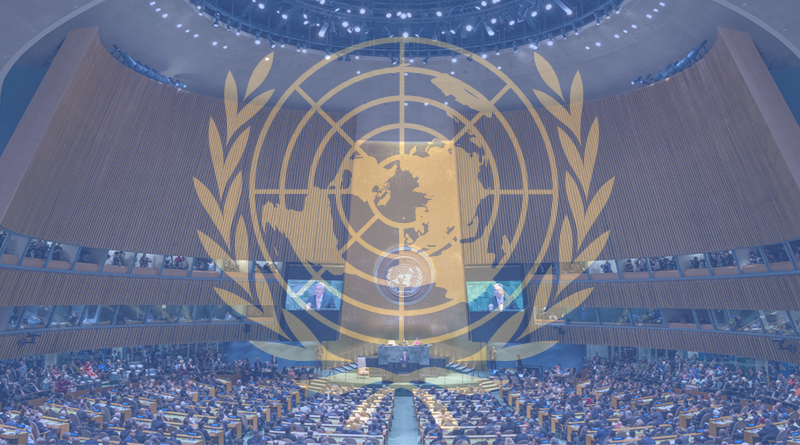
Here are the resolutions for the April 16 General Assembly session. The schools attending are Brittany Woods (7th grade), Grand Center Arts Academy, and the Melanin Home School Group. This may not be the final order/draft of resolutions.
| Status: | Sponsored by: | Topic: |
| GA-01 | Slovenia, Germany, Finland, South Africa, Qatar, Bahamas Melanin Home School Group | Drought in Ethiopia |
| GA-02 | Fiji Grand Center Arts Academy | Addressing Flooding and Extreme Heat in Lagos, Nigeria |
| GA-03 | Norway Brittany Woods Middle School | LGBTQIA+ Rights and Decriminalization |
| GA-04 | Greece Grand Center Arts Academy | Working to Solve Food Insecurity in South Sudan |
| GA-05 | Iran Brittany Woods Middle School | Cease Firing & Repairing Infrastructure |
| GA-06 |
Resolution GA-01 April 16
Re.: Drought in Ethiopia
Submitted to: General Assembly
Submitted by: Slovenia, Germany, Finland, South Africa, Qatar, Bahamas
Date: April 16, 2026
Whereas Sustainable Development Goal #2 is Zero Hunger, and
Whereas Sustainable Development Goal #6 is Clean Water and Sanitation, and
Whereas Sustainable Development Goal #13 is Climate Action, and
Whereas Article 25, section 1 of the UNIVERSAL DECLARATION OF HUMAN RIGHTS states, “Everyone has the right to a standard of living adequate for the health and well-being of himself and his family, including food, clothing, housing, and medical care, and necessary social services, and the right to security in the event of unemployment, sickness, disability, widowhood, old age, or other lack of livelihood in circumstances beyond his control.”, and
Alarmed that in the Horn of Africa 15.9 million people are expected to run out of food and need urgent food assistance by July of this year, and
Concerned that the drought has caused crop failures and food shortages for communities dependent on agriculture, and
Recognizing that 7 million children under the age of 5 across Ethiopia, Kenya, and Somalia face malnutrition, and
Believing that farmers can grow food successfully using water efficient agriculture methods,
Be It Hereby Resolved That The General Assembly:
- Action Plan: The United Nations will begin a 3-year pilot program called Water-Smart Agriculture for the Horn of Africa. We will begin in Ethiopia with the plan to expand to Kenya and Somalia if successful. We selected Ethiopia, Kenya, and Somalia because these are the top three countries suffering the most from the drought. We selected the Horn of Africa because it has experienced severe drought conditions between 2020 and 2023. These droughts have caused crop failures and food shortages. We understand that climate change is increasing the frequency of droughts and these communities depend on agriculture for food.
The program will:
- Create demonstration farms to model sustainable agriculture techniques
- Support small scale infrastructure such as solar pumps and well repairs
- Encourage efficient use of groundwater wells
- Evaluate results and expand successful solutions
Water-efficient techniques include:
- Aquaponic systems (recycle water)
- Drip irrigation (delivers small amounts of water directly to plant roots)
- Drought resistant crops such as sorghum and millet
- Soil conservation methods that help soil retain water
- Funding: We estimate that we will need $20 million dollars over 3 years. We are specifically asking for help from the United States of America, Russia, United Arab Emirates, and China. Each country will give $5 million. Funding will support:
- Farmer training programs – $5 million
- Demonstration farms – $3 million
- Pilot aquaponics and irrigation systems – $4 million
- Small-scale infrastructure improvements – $5 million
- Agriculture research and evaluation – $3 million
- Assessment
- Program success will be measured by:
- Food production target – 15-20% increase in food production within 3 years.
- Water efficiency target- 20-40% water efficiency
- Participation target- 60-75% of trained farmers adopting at least one water saving farming method.
Proof that targets are met will be measured by crop yields, food available in local markets, the number of farmers trained, and the amount of water used.
- Expansion – Expansion will begin after 3 years if our goals are met with 15-20% increase in food production, 20-40% water efficiency, and 60 -75% participation. If our goals are not met, we will not expand. Instead, we will stay in Ethiopia and make changes and improvements. If our goals are still not met after one year, we will stop funding the program and end the program completely.
Resolution GA-02 April 16
Re.: Addressing Flooding and Extreme Heat in Lagos, Nigeria
Submitted to: General Assembly
Submitted by: Fiji
Date: April 16, 2026
Whereas Sustainable Development Goal #11 is, and Sustainable Cities and Communities, and
Whereas Sustainable Development Goal #13 is Climate Action, and
Whereas Article 25, section 1 of the UNIVERSAL DECLARATION OF HUMAN RIGHTS states, “Everyone has the right to a standard of living adequate for the health and well-being of himself and his family, including food, clothing, housing, and medical care, and necessary social services, and the right to security in the event of unemployment, sickness, disability, widowhood, old age, or other lack of livelihood in circumstances beyond his control.”, and
Alarmed by rising sea levels and increased rainfall contributing to severe flooding in Lagos, and
Concerned that Lagos faces increasing extreme heat risks that threaten public health and safety, and
Noting with concern that over 1.4 million people in Lagos have faced high risk from major flooding events, and
Recognizing projections that climate change could cost Lagos up to $40 billion by 2050 if no action is taken,
Be It Hereby Resolved That The General Assembly:
- Calls for the reinforcement and upgrading of residential housing using stronger, water-resistant materials such as waterproof cement blocks and sealed construction methods to prevent flood damage;
- Encourages the development of flood-resistant building standards to ensure new homes are designed to withstand heavy rainfall and storms;
- Supports the improvement of urban drainage systems to reduce standing water and limit flood damage in high-risk areas;
- Recommends the creation of shaded public spaces and cooling centers to protect citizens from extreme heat, especially vulnerable populations;
- Requests international collaboration from developed nations to provide financial and technical support for climate-resilient infrastructure;
- Promotes community education programs to inform residents about flood preparedness and heat safety strategies;
Funding
- Estimated total project cost: Approximately $3,000,000 USD (initial phase)
- Funding sources:
- Contributions from developed nations (top 10 global economies)
- International climate funds and aid programs
- Funds will be used for:
- Construction materials (waterproof cement, sealing materials)
- Labor and rebuilding efforts
- Infrastructure upgrades (drainage systems)
- Cooling centers and public safety resources
Timeline
- Phase 1 (7–12 months): Begin rebuilding and reinforcing homes in highest-risk areas
- Phase 2 (1–3 years): Expand housing upgrades and improve drainage infrastructure
- Phase 3 (3–5 years): Develop cooling centers and long-term climate resilience programs
Evaluation
Success will be measured by:
- Reduction in flood damage to homes
- Decrease in number of people affected by flooding
- Improved living conditions and reduced heat-related illnesses
- Regular monitoring will be conducted by local government and international partners
Future Expansion
- Encourages expansion of this plan to other flood- and heat-vulnerable regions in West Africa
- Recommends sharing successful strategies with other rapidly growing coastal cities facing similar climate challenges
Resolution GA-03 April 16
Re.: LGBTQIA+ Rights and Decriminalization
Submitted to: General Assembly
Submitted by: Norway
Date: April 16, 2026
Believing that acceptance of people on the LGBTQIA+ spectrum is in the best interest of all countries,
Recognizing that in 12 countries being LGBTQIA+ is punishable by death,
Deeply Concerned that being LGBTQIA+ is not widely accepted and is criminalized in 65 countries,
Desiring that people be allowed to be themselves and love and marry whoever they wish, without being punished or discriminated against.
Be It Hereby Resolved That The General Assembly:
- Designates 2.5 million to programs (that will be mandatory across these countries -where being LGBTQ+ is frowned upon or illegal- in workplaces and schools) that promote LGBTQIA+ rights and human rights and dignity, and work on destroying prejudice. In countries where it is illegal, the main focus will be human rights in general so as to not break the laws of said country.
- Create online chat forums or private groups where people can find allies within their country, to reduce isolation.
- Expresses its hope that all member states decriminalize being LGBTQIA+ and criminalize discrimination of LGBTQIA+ people for the reasons of one’s own religion or prejudice.
a. Discrimination, in this case, means:
i. Physical abuse
ii. Being denied jobs, housing, entry, or travel due to the sole purpose of being LGBTQIA+
iii. Unequal treatment in any environment (court, workplace, school, etc.)
iv. Targeted hate crimes
Resolution GA-04 April 16
Re.: Working to Solve Food Insecurity in South Sudan
Submitted to: General Assembly
Submitted by: Greece
Date: April 16, 2026
Whereas Sustainable Development Goal #1 is No Poverty, and
Whereas Sustainable Development Goal #2 is Zero Hunger, and
Whereas Sustainable Development Goal #3 is Good Health and Well-Being, and
Whereas Article 25, section 1 of the UNIVERSAL DECLARATION OF HUMAN RIGHTS states, “Everyone has the right to a standard of living adequate for the health and well-being of himself and his family, including food, clothing, housing, and medical care, and necessary social services, and the right to security in the event of unemployment, sickness, disability, widowhood, old age, or other lack of livelihood in circumstances beyond his control.”, and
Alarmed that 7.7 million people in South Sudan are facing hunger in South Sudan, and
Saddened that 7.56 million people in South Sudan are facing malnutrition with over 2 million of them being children, and
Noting that over 92% of South Sudan’s population is living below the poverty line, and
Concerned that the unemployment rate in South Sudan is 12.5%,
Be It Hereby Resolved That The General Assembly:
- Action Plan:
Due to the tropical savanna climate in South Sudan, it is hard to grow normal crops but it easy to grow tubers, I want to start a program to train citizens of South Sudan on how to grow more crops like potatoes, yams, taro, and cassava.
I want to build a food bank open for all in the middle of South Sudan.
I also want to donate cooked food to people in South Sudan with the help of World Central Kitchen
- Funding – I am going to raise dues on the 10 wealthiest nations by 5%. The total price is going to be $5,583,423. This money is going towards training people and planting the crops, getting farm equipment for them, building food banks, and creating donation centers.
3. Timeline
- By the end of the first year, South Sudan should have 100 citizens trained on proper farming techniques for the tropical savannah climate and their farms should be started
- By the end of the second year, the South Sudan farmers will have built and supplied a regional food bank from the items they’ve harvested from their farms
- By the end of the third year, the regional food bank will grow to provide cooked meals from the donated crops and begin training people on how to cook nutritious foods from what is available.
4. Evaluation – I will know this plan is working if the food insecurity rate is reduced to 50% from 62% by the end of the third year, reduced to 38% from 50% by the end of the fifth year, and eventually down to 15% by the end of the 10th year. This plan will also be evaluated by the unemployment rate dropping from 12.5% to 5% by the end of the 10th year by increasing the amount of farming, food donation workers, and kitchen jobs available through this program.
5. This plan will be expanded to Afghanistan after the first 5 years. After that the next 5 years the plan should make it to Haiti.
Resolution GA-05 April 16
Re.: Cease Firing & Repairing Infrastructure
Submitted to: General Assembly
Submitted by: Iran
Date: April 16, 2026
Alarmed by the fact that at least 2,076 people died from recent bombing, and
Affirming the fact that dozens of energy infrastructure have been destroyed by missiles and drone strikes,
Be It Hereby Resolved That The General Assembly:
- Calls upon the United States to cease firing and help rebuild infrastructure.
- Note that rebuilding infrastructure should cost at least $25billion.
- Further invites Russia, China, and the United States to each pay about $83 million over the next 5 years.

