This is an article from the Winter 2025 Civitas Examiner (Volume 2, No. 4) and was written by one of our students, Jack E. The opinions expressed herein do not reflect those of Civitas other than respect for the value of open dialogue. To read more Civitas Examiner stories or to submit your own, click here.
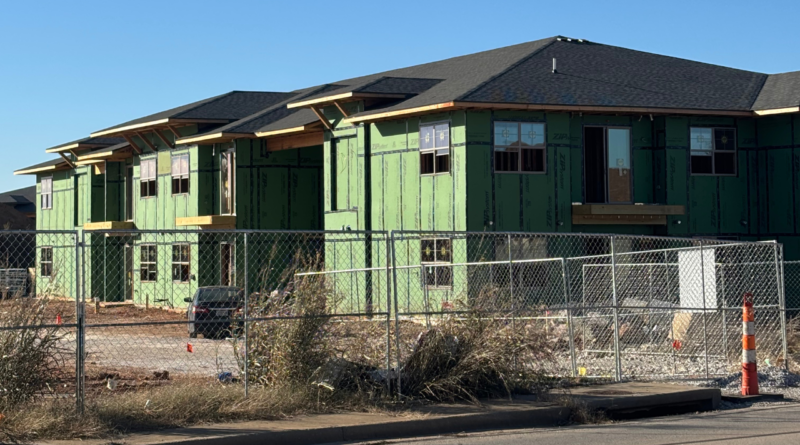
There’s a common joke in Nixa. Anytime that new construction is built, we always ask “Let me guess, more apartments?” But, there is some partial truth to this.
Nixa’s current residential projects include several estates, subdivisions and apartment complexes, further adding to Nixa’s steady population growth. Current estimates from the World Population Review place Nixa’s population at over 27,000, with projects saying that number could increase to almost 30,000. This is a +7,000 population increase from the 2020 census, which had Nixa’s population at 23,257.
The process of building a new residential property can be a long, drawn-out process.
“There could be a lot of stuff behind the scenes for six months to a year, just in conversation with whoever’s wanting to develop [property],” Nixa Director of Planning and Development Scott Godbey said. “Then once plans are submitted and get under review… [it] could take like a month to three months, potentially. Then once we get the plans approved, then it kicks in another, probably a year-long project of just constructing the building… It can go from conception all the way to completion date [in a] year and a half.”
With new residential additions, this can lead to an increase in the number of students in each school throughout the Nixa Public Schools system and the issue of school overpopulation rising. Many schools, not only in Nixa but throughout the nation, are unable to adequately fit an influx of new students. Many schools, including High Pointe Elementary, implement trailers to use as a temporary solution while new add-ons are being built.
However, while adding onto elementary schools is a positive, another issue arises when students progress to Nixa High School, where the current building layout makes it nearly impossible to build out. Building up would be a severe architectural challenge that could take months or years.
Nixa High School Junior Reece Loe says that overcrowded classes create issues with productivity and the ability to learn.
“Most classes average at 25-ish kids, [which] will result in classrooms needing bigger spaces, especially in hands-on classes like in the science courses,” Loe said.
According to the Missouri State Teachers Association, the recommended maximum number of students in a classroom from the 6th to 12th grade is 33.
With classrooms being overcrowded, Loe says that this can negatively impact classroom dynamics by making teachers have stricter policies.
“It will cause a lack of order and control for the teachers,” Loe said. “Classrooms can still very easily get out of control, and I know some teachers who suffer from that classroom environment. However, I do think it can result in stricter teachers who have higher class expectations. This can lead to backlash from the more rebellious students due to the lack of a free environment.”
Despite fears of overcrowding at schools, residential projects are effective not only for population growth but also for increasing business activity and economic growth.
“The benefit of residential projects is that it builds our population, but it also builds our available workforce,” Godbey said. “Having a good population spread through all the age groups gives us that workforce that will hopefully bring in the businesses. Then, by bringing in businesses, that brings in potential sales tax dollars, which helps the city of Nixa provide for other projects and amenities to our citizens.”
